Non Drop YouTube Watch Hours India: What Non-Drop Actually Means (2026)
"Non drop" is one of the most used and least explained terms in the entire Indian SMM panel market. Every panel selling YouTube watch hours puts "non drop guaranteed" on their homepage. Most Indian creators buying those services have a vague understanding of what it means but no clear picture of the mechanism behind it, why hours drop in the first place, or how to verify that what they received was actually nond rop delivery.
This guide gives you the complete, technically accurate picture of what non-drop watch hours means, the three types of watch hour decrease that Indian creators experience (only one of which is a panel quality failure), how to diagnose which type you are experiencing from YouTube Studio analytics, and what a genuine non-drop guarantee actually covers versus what it conveniently excludes.
First: What Is a "Drop" in YouTube Watch Hours?
A drop in the context of SMM panel watch hours means a decrease in your watch hour count after the panel has delivered your order.
Here is the sequence that creates the "drop" situation:
- You order 1,000 watch hours from a panel
- The hours are delivered — your YouTube Studio watch time analytics shows the increase
- Over the following days or weeks, your watch hour count decreases from its post-delivery peak
- You end up with 300 to 700 hours instead of the 1,000 delivered
This is what Indian creators mean when they say "the hours dropped." It is not a question of whether the hours arrived — they did. It is a question of whether they stayed.
"Non drop" delivery means the hours stay permanently after delivery. "Drop prone" delivery means hours arrive and then disappear.
Why Do Watch Hours Drop? The Technical Mechanism
YouTube's platform runs what can be described as a continuous watch time validation process. This is not a single periodic event — it runs in the background constantly, and it periodically recalculates watch time totals based on its evaluation of viewing session quality.
When YouTube's system identifies viewing sessions as inauthentic — based on patterns like abnormal playback speed, datacenter IP addresses, zero engagement signals (no pauses, no replays, no navigation on the page), or viewing sessions with no corresponding browser activity — it removes those sessions from your channel's validated watch time total.
This removal is what creators experience as a "drop." The hours disappear from your YouTube Studio analytics over a period of days to weeks as YouTube's validation processes run.
The key factor: The delivery method determines whether hours survive validation. Real viewing sessions from real devices with real browsing behavior pass validation. Automated bot scripts that loop your video do not.
The Three Types of Watch Hour Decrease (And Which Is Your Panel's Fault)
This is the section most guides miss entirely, and it is critically important for Indian creators to understand because conflating these three types leads to either incorrectly blaming a panel that delivered correctly, or incorrectly assuming natural variation is fine when it is actually a delivery failure.
Type 1: Audit Sweep Drop (Panel Quality Failure)
What it is: YouTube's validation system identifies the watch time from your panel order as coming from inauthentic sessions and removes it.
When it happens: Typically within 3 to 21 days of delivery. The removal can happen in a single large drop or gradually over several days.
How much drops: For low-quality bot delivery, 50 to 90 percent of delivered hours can disappear. For moderate-quality delivery, 20 to 40 percent may drop. For high-quality real-session delivery, under 10 percent typically drops (and often zero).
Is the panel responsible? Yes. This is what the non-drop guarantee is supposed to cover. If hours drop due to audit validation after delivery, a genuine non-drop panel refills the difference.
How to identify it: In YouTube Studio analytics, look at the watch time trend after your delivery window. A sharp decline over 3 to 7 days following the delivery peak indicates audit removal. The decline will be sudden rather than gradual.
Type 2: Rolling 12-Month Window Expiry (NOT a Panel Failure)
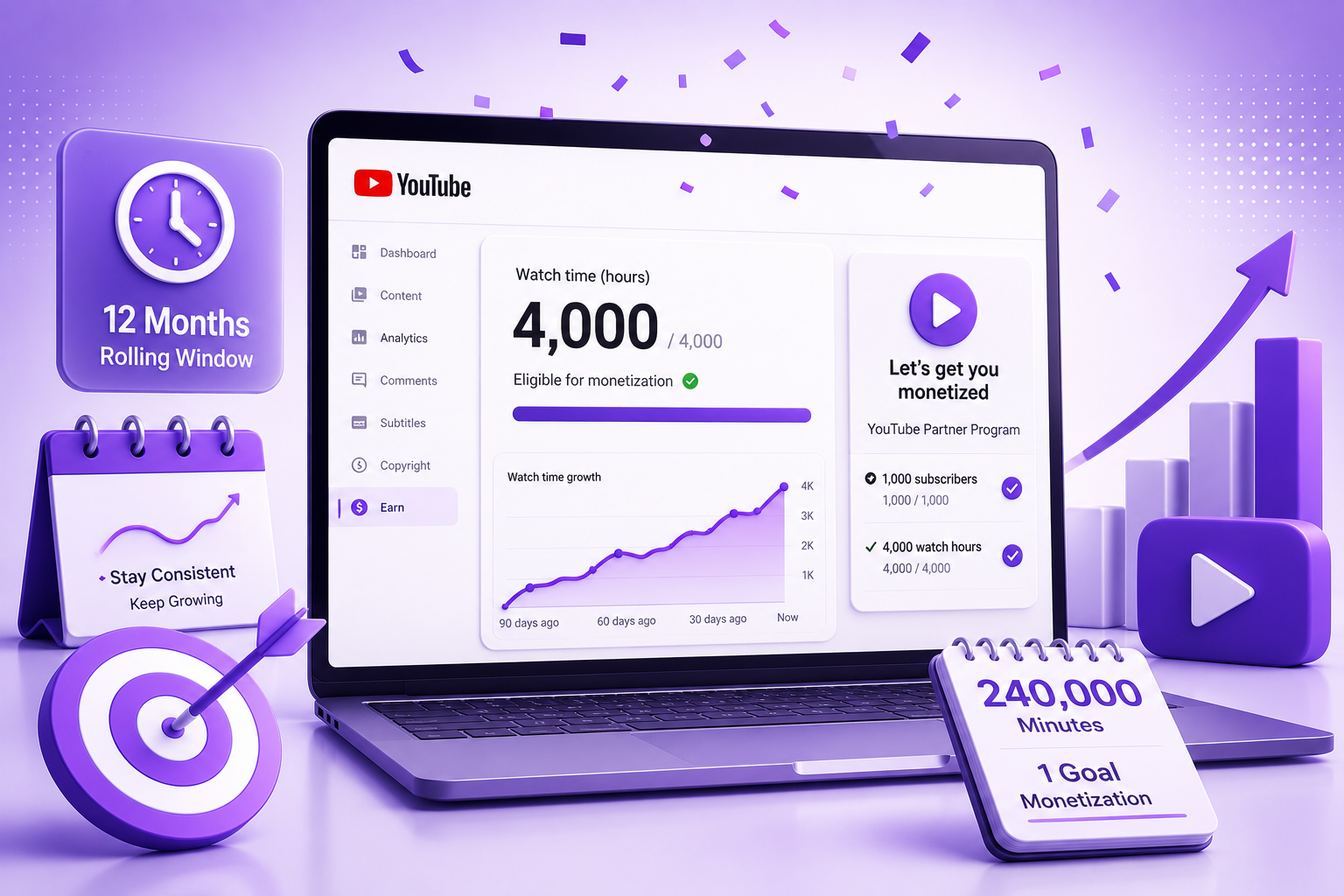
What it is: YouTube's Partner Program tracks watch hours on a rolling 12-month basis. Hours older than 12 months automatically fall off your YPP progress counter not your total watch time figure, but the counter that matters for monetization eligibility.
When it happens: Continuously, as old hours reach the 12-month mark and drop off the rolling window.
How much drops: Varies by channel — a channel with strong early growth that has since slowed will see significant rolling window drops as the early hours expire.
Is the panel responsible? No. This is not a panel delivery failure. This is YouTube's own YPP system design, and it affects all channels equally — both organic hours and panel-delivered hours expire from the rolling counter at 12 months.
How to identify it: In YouTube Studio, go to Earn → YPP Progress. If your watch time figure here is significantly lower than your Analytics → all-time total, the difference is old hours that have expired from the rolling window. This type of decrease is gradual and predictable, not a sudden post-delivery drop.
How to fix it: Accelerate earning new hours before the window expires faster than you are replacing them. This is exactly the situation where a targeted watch hours order from TrueSMMPanel is most strategically justified.
Type 3: Content Performance Decline (NOT a Panel Failure)
What it is: Your organic watch time earning rate decreases because fewer new viewers are finding your videos or because existing videos are receiving fewer views over time.
When it happens: Gradually, usually over weeks or months.
Is the panel responsible? No. This is an organic channel performance issue unrelated to any panel delivery.
How to identify it: Go to YouTube Studio → Analytics → Watch Time. If watch time is declining gradually and consistently over an extended period (not a sudden post-delivery drop), it is organic channel performance decline.
What Makes Watch Hours Non-Drop: The Delivery Quality Factors
Whether hours stay or drop comes down to the quality of the underlying viewing sessions. Here are the specific quality factors that determine whether panel-delivered watch hours survive YouTube's validation:
Factor 1: Real devices vs automated scripts
Real devices (actual phones, computers, or tablets with real browsers) generate session data that looks authentic. Automated scripts (running on servers, not real devices) generate session data with identifiable patterns — constant activity timing, no browser fingerprint variation, no incidental system activity.
Factor 2: Residential IP addresses vs datacenter IPs
Real viewers access YouTube from home internet connections (residential IPs) or mobile data (cellular IPs). Server farms that run bot scripts use datacenter IPs a completely separate IP address range that YouTube's systems have historically tracked as high-abuse sources.
Factor 3: Realistic viewing behavior
Real viewers pause videos, rewind to re-watch sections, have slight variations in when they start and stop watching. Bot sessions often play at perfectly consistent speeds with no pauses, no variations, and no accompanying browser behavior (cursor movement, scroll, etc.).
Factor 4: Session duration per view
Bot delivery often delivers watch time by playing long sessions one session accounts for 3, 5, or even 30 hours of watch time. Real viewers can only watch in real time. A single session that accounts for more hours than the viewer could physically watch is a clear quality flag.
What "non-drop" delivery means technically: The panel uses real devices with residential IPs, realistic viewing behavior, and natural session durations. These sessions generate watching data that YouTube's validation system cannot distinguish from genuine organic viewership.
Reading a Non Drop Guarantee: What Is Real vs Marketing Language
Almost every Indian panel says "non-drop guaranteed." Here is how to evaluate whether the guarantee is real:
Signs of a genuine non-drop guarantee:
- Specifies a refill window: "We refill drops within 30 days of delivery completion"
- Defines what counts as a drop: "If your watch hour count decreases below the delivered amount after delivery"
- Has a clear claim process: "Contact support with your order ID and current watch hour screenshots"
- Does NOT exclude YouTube audit events: many panels write "we cover drops except those caused by YouTube platform changes" — this excludes exactly the most common drop scenario, making the guarantee nearly useless
Signs of a marketing-only "guarantee":
- "Non-drop guaranteed" with no further specification
- "Lifetime guarantee" with no claim process
- Refill window of 24 to 48 hours (impossible to detect audit drops this quickly, window designed to never trigger)
- Fine print excluding "platform enforcement" or "YouTube algorithm updates"
TrueSMMPanel's non drop guarantee covers decreases in watch hour count after delivery with a clear order-ID-based refill process. Contact support, provide your order ID and current watch hour count from YouTube Studio, and we process the refill.
How to Verify Non-Drop Delivery After Receiving Your Order
Use this 3-step verification process after any watch hours panel delivery:
Step 1: Note the watch hour peak (Day of delivery completion)
Go to YouTube Studio → Analytics → Watch Time. Filter the date range to the delivery period. Note the total watch time at the peak of delivery (usually the day the order completes).
Step 2: Check again at Day 7 (First validation checkpoint)
Return to the same Analytics view 7 days after delivery completion. Compare the current watch time to the Day 1 peak. If more than 20 percent has dropped in this period, this is likely audit removal — contact support with your order ID immediately.
Step 3: Check again at Day 14 (Second validation checkpoint)
Most watch hour audit removals happen within the first 14 days. If your count is stable at Day 14 (within 5 to 10 percent of the peak), the delivery has passed validation and hours are non-drop.
Check the YPP progress counter specifically:
If your goal is the monetization threshold, monitor the YPP progress counter in YouTube Studio → Earn, not the all-time Analytics total. The YPP counter is the rolling 12-month figure that actually matters for eligibility. Compare your YPP counter before and after delivery to see how much actually counted toward your threshold.
Why Non Drop Matters More for Watch Hours Than for Views
Watch hours have a unique characteristic that makes non-drop quality more critical than for views: the cumulative threshold effect.
If you buy 1,000 views and 700 drop, you have lost 70 percent of your view social proof. That is a financial waste, but your channel continues functioning normally.
If you buy 1,000 watch hours toward the 4,000-hour threshold and 700 drop, you have lost 70 percent of your threshold progress toward monetization. But more importantly — you may have been making content decisions and planning your monetization application timeline based on a watch hour count that did not survive. Discovering after 2 to 3 weeks that you actually gained only 300 hours instead of 1,000 means your monetization timeline shifts by weeks.
This is why the delivery quality question (which directly determines non-drop status) is more consequential for watch hours than for any other YouTube SMM service.
TrueSMMPanel Watch Hours: Non Drop Delivery in India
TrueSMMPanel's YouTube Watch Hours service uses real-session delivery — actual browsing sessions, not automated loops. This is the delivery method that passes YouTube's validation process and delivers hours that hold.
Current packages for Indian creators:
- All payments in rupees via UPI, Paytm, and major Indian payment methods
- Gradual drip-feed delivery over 7 to 30 days (prevents artificial spikes)
- Non-drop guarantee with order ID-based refill process
- 4,000-hour goal packages available for the YPP monetization milestone
👉 See current watch hours packages and rupee pricing
Frequently Asked Questions
How do I know if my watch hours dropped due to the panel or due to the 12-month rolling window?
Check the timing. If hours drop within 1 to 14 days of panel delivery completion, it is audit removal (panel quality issue). If your YPP counter declines gradually over weeks or months without a recent panel order, it is the rolling 12-month window expiring old hours.
Should I contact the panel immediately when hours drop or wait?
Contact immediately when you notice the drop. Most non-drop guarantees have a claim window (typically 30 days). Document the drop with screenshots of your YouTube Studio watch time analytics before and after delivery. Include your order ID in the support message.
Why do some panels deliver hours that look fine in Studio analytics initially but drop weeks later?
Bot delivery often passes YouTube's first review cycle (which runs quickly after viewing sessions) but fails the second, deeper audit cycle that runs 7 to 21 days later with more sophisticated pattern analysis. This is why checking at Day 7 and Day 14 is more meaningful than checking on the day of delivery.
Does the panel need access to my YouTube Studio to verify my watch hour count for a refill claim?
No. You provide screenshots of your YouTube Studio analytics showing the watch hour count before and after the drop. The panel does not need or should not have access to your YouTube account credentials.
Can I order watch hours again on the same channel after previously receiving a refill?
Yes. There is no restriction on multiple orders or refill-followed-by-reorder. Each order is evaluated independently.
Related Reading
- YouTube Watch Hours Panel — Current packages and pricing for non-drop watch hours delivery in India
- Buy YouTube Watch Hours India: What to Look For Before You Order — The 7-point pre-purchase checklist for any watch hours panel
- How Long Does It Take to Get 4000 Watch Hours: Organic vs SMM Panel — Timeline comparison for reaching the 4,000-hour YPP threshold
- Cheapest Way to Get 4000 Watch Hours on YouTube in India — Full cost comparison across all methods including real rupee figures
Last updated July 2026. YouTube's watch time validation processes and YPP requirements are subject to change.